Welcoming in a new year is an opportunity to reflect on what areas of our life we wish to change. As we welcome in 2026 could this be the year you decide to prioritise your brain health and what changes you can make to reduce or delay your risk of developing dementia in future.
In this blog we want to help you think about what changes you might want to make to boost your brain health. Each month, we’ll be exploring an evidence-based risk factor for dementia and sharing practical ways you can protect your brain. This month, we’re focusing on one of the 14 modifiable risk factors: physical activity.
Exercise or physical activity is one of those 14 modifiable risk factors. In 2019 the UK Chief Medical Officers’ (CMOs) physical activity guidelines stated a clear message about physical activity:
“If physical activity were a drug, we would refer to it as a miracle cure, due to the great many illnesses it can prevent and help treat.”
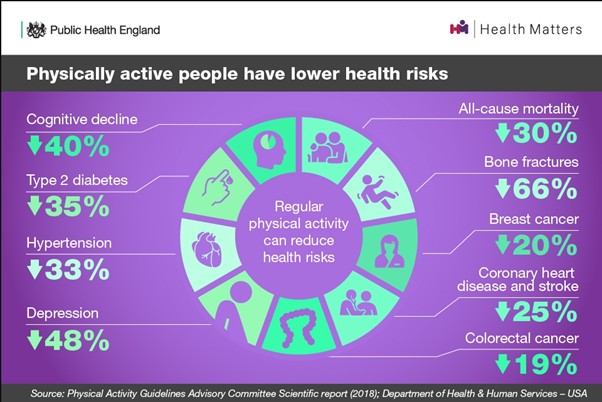
Research shows that regular physical activity may reduce your risk of dementia by up to 20% compared to people who don’t take regular exercise. Current guidelines recommend 150 minutes of moderate exercise a week (such as brisk walking or cycling) or 75 minutes of vigorous intensity exercise per week (such as running).
Yet many of us aren’t moving enough. Around 1 in 3 men and 42% of women fall short of these guidelines. Our population is around 20% less active than in the 1960s. If current trends continue, it will be 35% less active by 2030. By aiming for an ‘active lifestyle’ such as actively travelling, through walking/ cycling rather than driving we can hopefully reduce this trend as well as implementing other changes.
People can be put off exercising feeling that they don’t fit a certain stereotype, or that they are not completing enough exercise to be of benefit. However, evidence shows that the people who will achieve the greatest benefit to their brain health are those who go from being inactive to doing some amount of exercise. Sustaining physical activity throughout midlife also seems to have the best effect on reducing dementia risk.
Exercise at any age appears to be helpful for cognition, possibly through changes in blood flow and function from reduced blood pressure, improving brain plasticity or reducing neuroinflammation. Research has shown that people who engage in moderate to vigorous exercise on more days have relatively larger brain volumes than those who do less or no exercise.
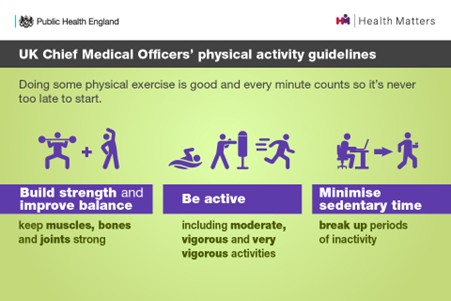
Some people may ask what does physical activity mean and to reassure, it doesn’t mean you have to pay for a gym membership or take up running a half marathon to get the benefits. Public Health England break it down into three areas
- Cardiovascular activity
- Strengthening exercise
- Reducing sedentary time
There is little evidence so far of any type of exercise being better than another, meaning that whatever you enjoy, or have fancied trying, whether it is yoga, or walking more, both are likely to be of benefit.
If you’re looking for support to get started, there are plenty of helpful resources available. The NHS Get Active pages offer beginner friendly guidance, and community initiatives like parkrun provide a free, friendly way to get moving. If you’re local to Bath, you might also explore BathFitFam, a welcoming group supporting people of all abilities to take up running.
Small steps can make a big difference. So as you look ahead to the year to come, could 2026 be the year you start moving for your mind?
More news & views

Depression and dementia risk: What the latest research shows
Depression and dementia are more closely linked than once thought. The Lancet 2024 report identifies depression in midlife as a potentially modifiable risk factor for dementia. While the exact link is unclear, changes in lifestyle, social engagement, and stress-related brain effects may play a role.

How dementia research is making a real difference for carers: John’s story
When John Desmond’s wife, Linda, was diagnosed with semantic dementia in 2021 at the age of 67, it marked the beginning of a new chapter for them both. Semantic dementia, a form of frontotemporal dementia, affects a person’s ability to use and understand words.

Running for mum: Sue takes on the Bath Half for ReMind UK
This weekend, Sue Mercer will take on the Bath Half Marathon, running 13.1 miles through the city to raise funds for ReMind UK. Sue is no stranger to the Bath Half. Last year she helped coach runners who were raising money for ReMind UK, organising training runs and supporting them along the way.