
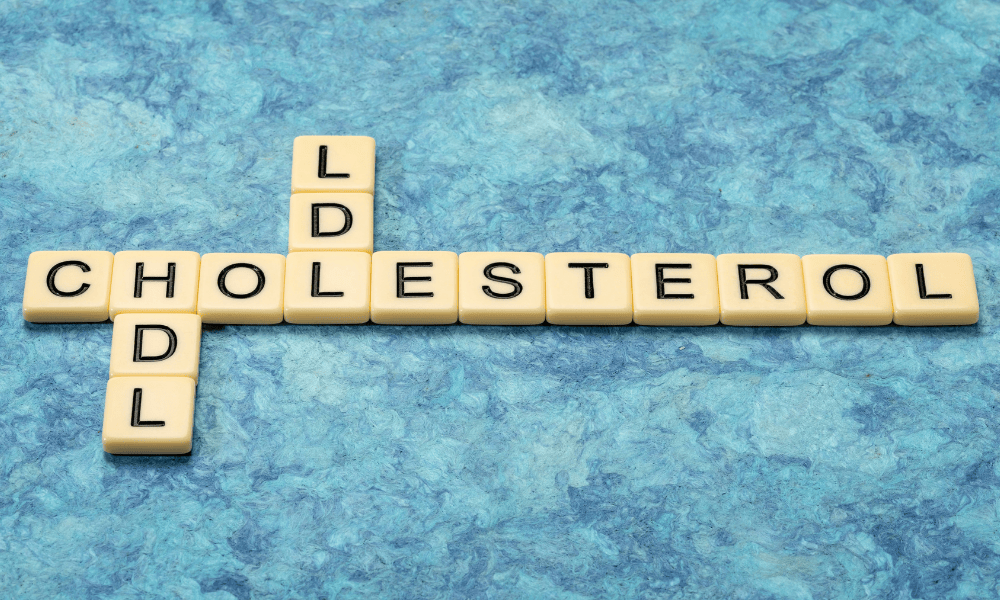


March heralds the start of Spring, longer hours of daylight, new growth and new life. Like nature, we may feel ready to emerge from our hibernation to embrace new personal growth, looking at how we can improve our health.
This month as part of our focus on brain health we look at the importance of being aware of the relationship between low density lipoprotein (LDL) cholesterol levels in mid life and dementia risk.
What is cholesterol?
Cholesterol is a wax like substance which is essential for our body to run effectively. Cholesterol is produced in the liver and used by the body to help build cells, make hormones and some vitamins. We also get cholesterol in our diet; common sources include meat, processed meats, butter, cheese and milk.
There are different types of cholesterol. In this article we focus on two commonly reported types of cholesterol, LDL and high density lipoprotein (HDL) cholesterol. They are often referred to as being called ‘good’ (HDL) cholesterol and ‘bad’ (LDL) cholesterol. The reason for this is due to how they work. HDL cholesterol works to take excess cholesterol in our bodies to the liver where it can be broken down, preventing a build up. On the other hand, if LDL cholesterol builds up, causing high levels within our bodies, it can become deposited within our blood vessels. Over time this can cause our blood vessels to become ‘clogged up’ or narrowed increasing our risk of having a heart attack or stroke.
Is there a link between cholesterol and dementia risk?
The Lancet 2024 Dementia prevention, intervention and care report highlighted that a high LDL cholesterol in mid life is associated with a higher risk of developing dementia. The Lancet report defined a high LDL cholesterol level as 3 and above.
The cause for this association is under investigation. A common mantra in brain health is ‘what is good for the heart is good for the brain’. A low LDL cholesterol will help to reduce the risk of the blocking up of the blood vessels, reducing the risk of heart attack and stroke and is associated with a lower risk of dementia. An excess build up of cholesterol in the brain is associated with increased deposition of proteins in the brain linked with dementia, suggesting a potential mechanism for the link between LDL cholesterol and dementia. In turn HDL (‘good’) cholesterol is associated with reducing excessive cholesterol and brain proteins linked to dementia.
Being aware of this link means that we can take have better understanding of the importance of LDL cholesterol level and its associated risk with dementia.
What can we do?
When it comes to thinking of actions there are a few things to consider.
High cholesterol can run in some families. If you have a parent or sibling who has had a heart attack or stroke before the age of 60 it is worth considering seeing your GP for them to register this information and consider any next steps.
If you are invited for a GP health check, go! Knowing your LDL levels allows you take better control of your health.
If you have a high LDL cholesterol it would be worth reviewing your diet and seeing whether you follow a mediterranean diet, which is associated with a lower LDL cholesterol. Reducing your alcohol intake and stopping smoking is associated with a lower LDL level.
Exercising regularly to meet the Government guidelines of 150 minutes (2.5 hours) a week can have a positive impact on lowering your LDL cholesterol.
Research is ongoing as to whether statins prevent dementia. We know that statins reduce LDL cholesterol, but further evidence is needed to be able to confirm whether statins prevent dementia. The NHS offers further advice about how to lower your cholesterol.
Being aware that a high LDL cholesterol (LDL of 3 and above) in mid life is associated with an increased risk of developing dementia empowers us to better understand our cholesterol results and take appropriate action to maximise our brain health.
At Remind UK our Brain Health Clinic provides a comprehensive assessment of evidence based modifiable risk factors for developing dementia and a personalised plan to help people on their journey of maximising their brain health. We work to help people flourish, similar to the changes in nature we see in Spring. When you see the leaves on the trees returning, remember that like them you can regenerate to be the best version of yourself in 2026.
More news & views

Running for mum: Sue takes on the Bath Half for ReMind UK
This weekend, Sue Mercer will take on the Bath Half Marathon, running 13.1 miles through the city to raise funds for ReMind UK. Sue is no stranger to the Bath Half. Last year she helped coach runners who were raising money for ReMind UK, organising training runs and supporting them along the way.

You’re not alone: How ReMind UK’s Wellbeing Programmes make a difference
Healthcare research and evaluations highlight that peer networks give people something that clinical services alone often don’t provide: connection, understanding, and shared experience. Diagnosis should be the beginning of support, not the end of it, and that’s exactly why ReMind UK’s Post-Diagnosis Support Programme exists.
Why I took a brain health assessment: Ian Waller’s story
When Ian Waller visited ReMind UK’s Brain Health Clinic, his motivation was deeply personal. With both his mother and grandmother affected by dementia, Ian wanted to better understand his own risk and, importantly, what he could do about it.