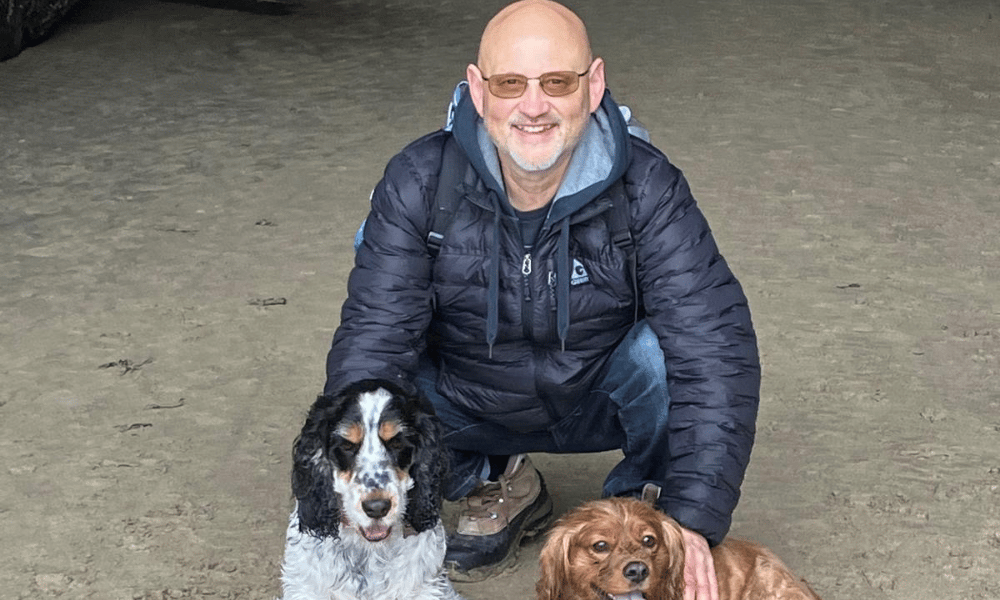
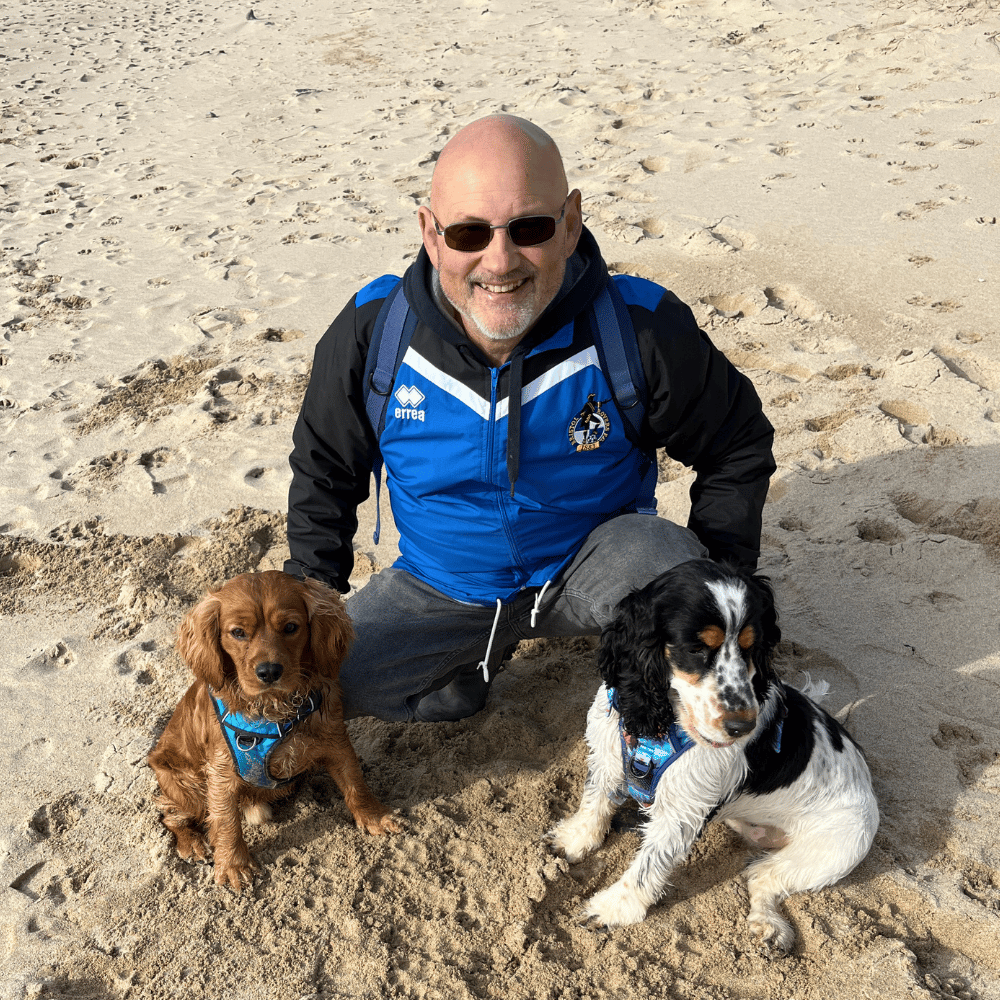
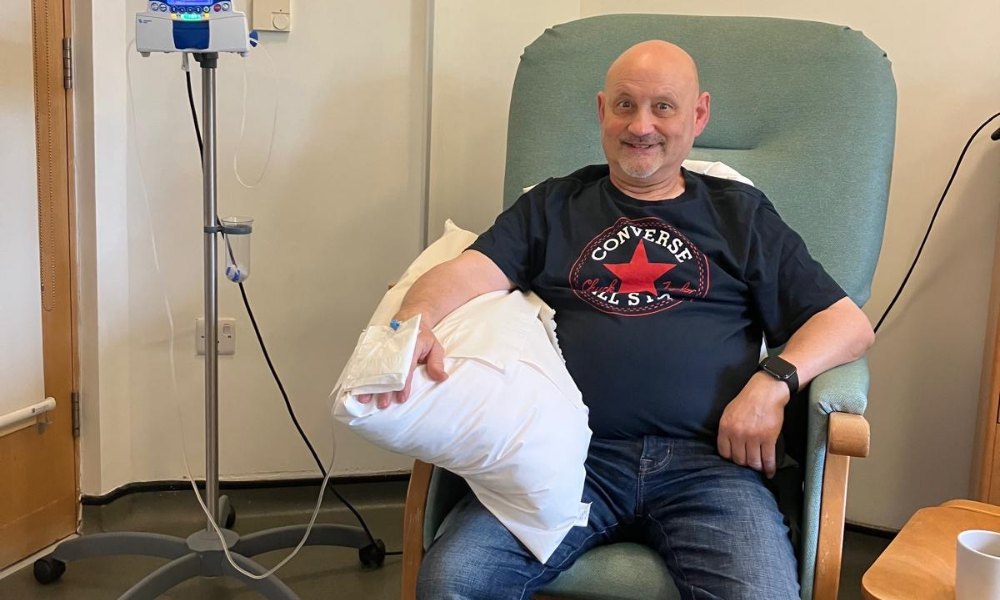
For Paul Norman, forgetting familiar roads wasn’t just frustrating, it was frightening.
At just 56, Paul, from Whitchurch in Bristol, began experiencing worrying changes in his memory and cognitive processing. Everyday tasks that had once been second nature became difficult. He struggled to manage aspects of his work and home life, and even his familiar commuting routes across Bristol started to feel completely unfamiliar.
Work became harder. Confidence disappeared. With dementia running deeply through his family, Paul feared the worst.
One of seven children, Paul’s mother had Alzheimer’s disease, one of his brothers is currently living with frontotemporal dementia, another brother died from a brain haemorrhage, and one of his sisters has recently begun experiencing memory problems. His father is also believed to have had dementia, although he was never formally diagnosed.
In 2022, after seeking help from his GP, Paul was diagnosed with Functional Cognitive Disorder (FCD) – a condition where the brain is structurally healthy, but memory and cognitive processing become disrupted, often due to stress, poor sleep or anxiety.
Then came an opportunity, Paul explains;
Two years ago I was struggling badly with my memory at work and home. My daughter really noticed the change in me after she moved out. She searched online for clinical trials and found that ReMind UK were recruiting research volunteers. I had some tests done and managed to get onto their Trailblazer clinical trial as I fitted their criteria."
Paul Norman
Paul has worked for nine years as a warehouse materials operative at a train maintenance depot in Stoke Gifford, supplying parts for companies such as Great Western Railway. His role is varied and involves a demanding continental shift pattern.
When his memory difficulties emerged, his company’s occupational health team assessed his duties and made temporary adjustments. While he could still manage the physical aspects of his job, tasks requiring memory, concentration or processing, such as computer work, became challenging. He was temporarily asked to stop driving a forklift truck, operating a 12.5
Adapting to these changes was difficult. Paul knew he was capable, but accepted that short
Taking part in ReMind UK’s Trailblazer clinical trial proved transformative.
“I received absolutely fabulous care from the team at ReMind UK throughout the two
I’m so grateful for the improvement I’ve experienced. I’m also delighted that my company has allowed me to return to all of my original duties. I still get lost occasionally on my way to work if there are diversions, but my boss is very understanding.”
Over the past 18 months, Paul has seen a dramatic improvement in his memory and cognitive abilities. He has returned to all of his previous responsibilities at work. He has regained confidence, independence and hope for the future and he’s preparing to volunteer again because he knows that research changes lives.
Paul’s story is a reminder that every breakthrough starts with people willing to take part in research.
Today, almost one million people across the UK are living with dementia, and that number is expected to reach 1.4 million by 2040.
Clinical trials are where tomorrow’s treatments begin.
More news & views

Lifelong learning and brain health: Building your cognitive reserve
Education, intellectually stimulating occupations, and mentally challenging activities throughout life are thought to contribute to cognitive reserve. Continuous learning, problem solving and being mentally active can take many forms. A perfect example of participating in a mentally challenging activity would be to learn a new musical instrument, which incorporates multiple cognitive skills.

READ-OUT study’s 1000th participant recruited at ReMind UK
Bob became the 1,000th volunteer to join the READ-OUT trial, an important milestone that shows the difference people can make by taking part in clinical research. After being diagnosed with mild cognitive impairment (MCI), he chose to take part in the READ-OUT trial, a major national dementia research study exploring whether blood tests could help diagnose dementia earlier and more accurately. Bob said that if his experience could help others facing the same uncertainty, it was worth it.

Jon Snow’s story highlights the importance of talking about Alzheimer’s
Broadcaster Jon Snow has spoken publicly about living with Alzheimer’s disease, sharing his diagnosis in the hope of raising awareness and reducing stigma around dementia. Jon Snow’s experience of living with Alzheimer’s will be explored in a powerful new documentary, Jon Snow: A Last Big Story, produced by Basement Films and airing on Channel 4 on Saturday, 20 June 2026