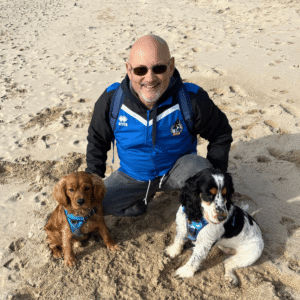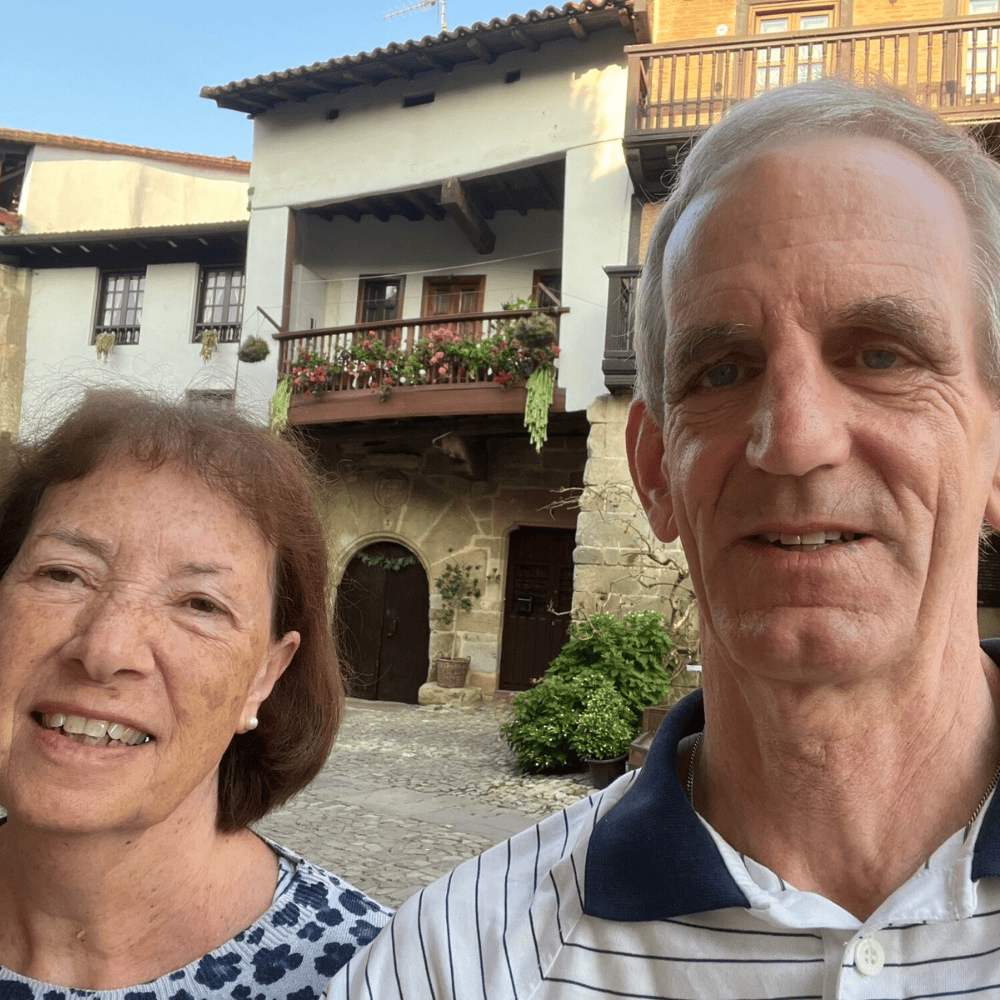

When John Desmond’s wife, Linda, was diagnosed with semantic dementia in 2021 at the age of 67, it marked the beginning of a new chapter for them both. Semantic dementia, a form of frontotemporal dementia, affects a person’s ability to use and understand words.
Linda had first noticed subtle changes back in 2018 while she was working as a pharmacist, although they weren’t immediately obvious to others, including John. When the diagnosis finally came, John remembers feeling “more surprise than anything. She did not seem really any different.”
After 36 years of marriage, John found himself stepping into a new role, not just as Linda’s husband, but also as her carer.
Living with semantic dementia
Frontotemporal dementia often affects people at a younger age than other forms of dementia. While dementia most commonly affects people over 65, frontotemporal dementia is typically diagnosed between the ages of 45 and 65.
For Linda, the condition has mainly affected language. She sometimes struggles with basic words or abstract concepts, though she has developed creative ways to adapt.
“She’s forgotten some quite basic words, but she does really well and lifestyle routines haven’t really changed,” John says. “She’ll write down words she’s forgotten and use good old Google images to attach meaning to them.”
John believes his background teaching English as a foreign language has helped him adapt his communication with Linda, particularly when explaining concepts in different ways.
A long-standing connection with ReMind UK
John and Linda were already connected with ReMind UK before taking part in research. In 2023, John ran the Bath Half Marathon as a fundraising ambassador for the charity, helping raise awareness and support for people affected by dementia. The couple also attended several workshops to support the development of ReMind UK’s post diagnosis support interventions.
As Linda’s condition progressed, John also accessed ReMind UK’s carers support, gaining practical advice and reassurance during a time of uncertainty.
While balancing caring responsibilities with part-time work as an exam invigilator, John began looking for other ways he could contribute.
Part of the challenge has been working and caring at the same time. We live near a dementia support charity but I haven’t always had time to attend group sessions with Linda. In the meantime, I thought at least I can get involved in research as far as possible."
Getting involved in dementia research
John joined the CareCoach study funded by the National Institute for Health and Care Research.
CareCoach is designed specifically for carers of people living with dementia. The online programme combines learning resources with coaching support via email, video calls or phone. Researchers are exploring whether the programme improves carers’ confidence, wellbeing and overall quality of life.
Encouraging others to take part
Although John initially hoped to find research specifically focused on Linda’s condition, he quickly saw the wider value of studies supporting carers.
You’ve got nothing to lose for a start, it is worthwhile making yourself aware of other people in a similar situation. Even if the degree of dementia in the person you’re caring for is different, there are aspects that are similar. And there is a real focus on you as a carer."
By taking part in studies like CareCoach, John is helping researchers better understand what carers need, knowledge that will ultimately improve support for families affected by dementia.
How you can get involved through ReMind UK
If you or someone you care for is living with dementia, ReMind UK can help you get involved in research opportunities like this. Research participation doesn’t just help scientists, it helps shape better support, services and understanding for people living with dementia and those who care for them.
If you’d like to find out more about volunteering for dementia research please email: research@reminduk.org
More news & views

Lifelong learning and brain health: Building your cognitive reserve
Education, intellectually stimulating occupations, and mentally challenging activities throughout life are thought to contribute to cognitive reserve. Continuous learning, problem solving and being mentally active can take many forms. A perfect example of participating in a mentally challenging activity would be to learn a new musical instrument, which incorporates multiple cognitive skills.

READ-OUT study’s 1000th participant recruited at ReMind UK
Bob became the 1,000th volunteer to join the READ-OUT trial, an important milestone that shows the difference people can make by taking part in clinical research. After being diagnosed with mild cognitive impairment (MCI), he chose to take part in the READ-OUT trial, a major national dementia research study exploring whether blood tests could help diagnose dementia earlier and more accurately. Bob said that if his experience could help others facing the same uncertainty, it was worth it.

Jon Snow’s story highlights the importance of talking about Alzheimer’s
Broadcaster Jon Snow has spoken publicly about living with Alzheimer’s disease, sharing his diagnosis in the hope of raising awareness and reducing stigma around dementia. Jon Snow’s experience of living with Alzheimer’s will be explored in a powerful new documentary, Jon Snow: A Last Big Story, produced by Basement Films and airing on Channel 4 on Saturday, 20 June 2026