

As we begin Alzheimer’s Month, our first focus is on understanding what Alzheimer’s disease really is. Understanding Alzheimer’s can help reduce fear and stigma, and encourage people to seek advice early if they notice changes in themselves or someone they care about.
Alzheimer’s is the most common cause of dementia
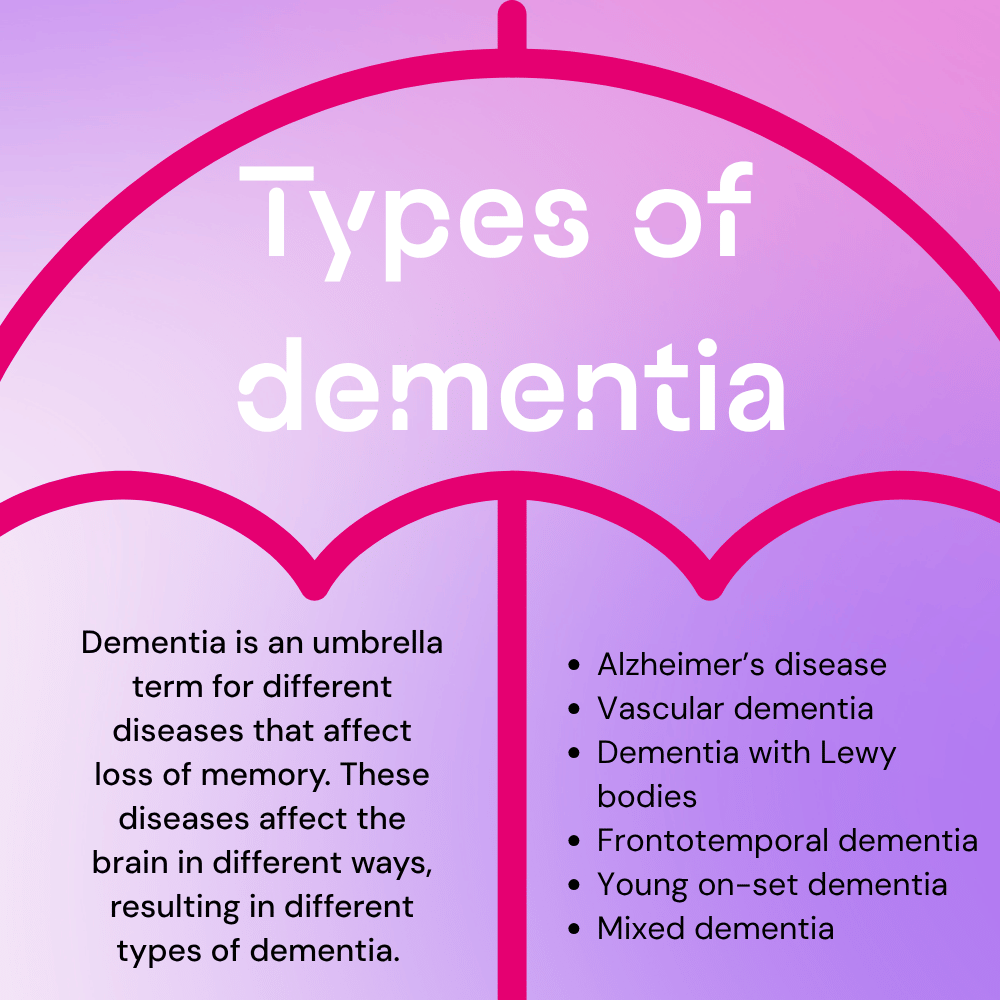
Dementia is not a single disease, it is an umbrella term used to describe a group of symptoms that affect memory, thinking, behaviour, and the ability to carry out everyday activities.
Alzheimer’s disease is the most common cause of dementia, accounting for 60–80% of dementia cases. That means most people living with dementia are likely to have Alzheimer’s disease.
There are currently an estimated 982,000 people living with dementia in the UK, and this number is projected to rise to 1.4 million by 2040 as the population ages.
Alzheimer’s is a disease of the brain
Alzheimer’s disease affects the brain by damaging nerve cells and disrupting the connections between them. Over time, this can cause parts of the brain to shrink and lose function.
These changes can affect many different areas of thinking and behaviour, not just memory. That is why Alzheimer’s is often described as a disease of the brain, rather than simply a “memory problem.”
More than 520,000 people in the UK are estimated to be living with Alzheimer’s disease, making it one of the country’s most significant health challenges.
Over time, these changes can cause brain cells to die and parts of the brain to shrink. This affects how the brain processes information, stores memories, communicates, and controls behaviour.
Alzheimer’s usually develops slowly, often over many years, and symptoms can be mild at first before becoming more noticeable.
Early symptoms of Alzheimer’s
Many people associate Alzheimer’s only with memory loss, but early symptoms can be broader and may vary from person to person. While memory loss is often an early sign, Alzheimer’s can also affect:
Language — difficulty finding the right words or following conversations
Problem-solving — struggling with tasks that were once familiar
Orientation — becoming confused about time, place, or direction
Judgement — making decisions that seem unusual or out of character
Mood and behaviour — changes in personality, confidence, or social engagement
These symptoms may be subtle at first, and the person experiencing them may not always recognise that anything is wrong.
Later symptoms of Alzheimer’s
As Alzheimer’s progresses, symptoms usually become more pronounced and can affect a person’s independence. Later symptoms may include:
Significant memory loss, including forgetting names of close family and friends
Difficulty recognising familiar places or people
Problems with communication and understanding language
Increased confusion about time and place
Changes in behaviour, such as agitation, anxiety, or withdrawal
Difficulty with everyday activities such as dressing, eating, or personal care
How is Alzheimer’s different from normal ageing?
Some changes in memory and thinking can be a normal part of getting older. For example, it is common to occasionally forget where you put your keys or struggle to recall a word that later comes back to you.
Alzheimer’s is different because the changes are more persistent and begin to interfere with daily life.
Common misconceptions about Alzheimer's
False
False
False
What should you do if you’re concerned?
If you are worried about your own memory, or the memory of a loved one, the first step is to speak to a healthcare professional. Early assessment can help identify the cause of symptoms, which may not always be Alzheimer’s disease.
Seeking advice early can provide:
A clearer understanding of what is causing the symptoms
Access to appropriate treatment and support
More time to plan for the future
Reassurance for individuals and families
Specialist memory assessment services, such as ReMind UK’s private memory clinic, can offer expert evaluation for people concerned about Alzheimer’s symptoms in themselves or a loved one. These assessments can help provide clarity, guidance, and access to the right support at the earliest possible stage.
The wider impact of Alzheimer’s and dementia
Alzheimer’s and dementia affect not only the person diagnosed, but also families, friends, carers, and communities.
Dementia is estimated to cost the UK £42.5 billion in 2024, with costs expected to rise to over £90 billion by 2040.
More than one in three people with dementia in the UK do not have a formal diagnosis, meaning many are missing out on support and treatment.
These figures highlight why awareness, early recognition, and access to support are so important.
Why early advice matters
It can be worrying to notice changes in your memory or thinking, but seeking advice early can make a real difference. An early assessment can help identify the cause of symptoms, provide access to support and treatment, and give individuals and families more time to plan for the future.
If you’re worried about your memory, it’s important to seek advice early.
ReMind UK Memory Services
Get Support
More news & views

What is the future of dementia research?
In July, London hosted the Alzheimer’s Association International Conference (AAIC), an annual conference dedicated to advancing dementia science and clinical practice.

Living with Alzheimer’s – Derek McCaig’s story
An Alzheimer’s diagnosis can bring uncertainty. What will life look like now? For Derek McCaig and his wife Sue, adapting to Alzheimer’s has meant making some changes but it has also meant continuing to stay active, social and involved in the things they enjoy.

How type 2 diabetes affects brain health and dementia risk
This months Brain Health blog focuses on the link between type 2 diabetes and dementia. At ReMind UK we are passionate about supporting individuals to maximise their brain health, aiming to reduce or delay their risk of developing dementia.