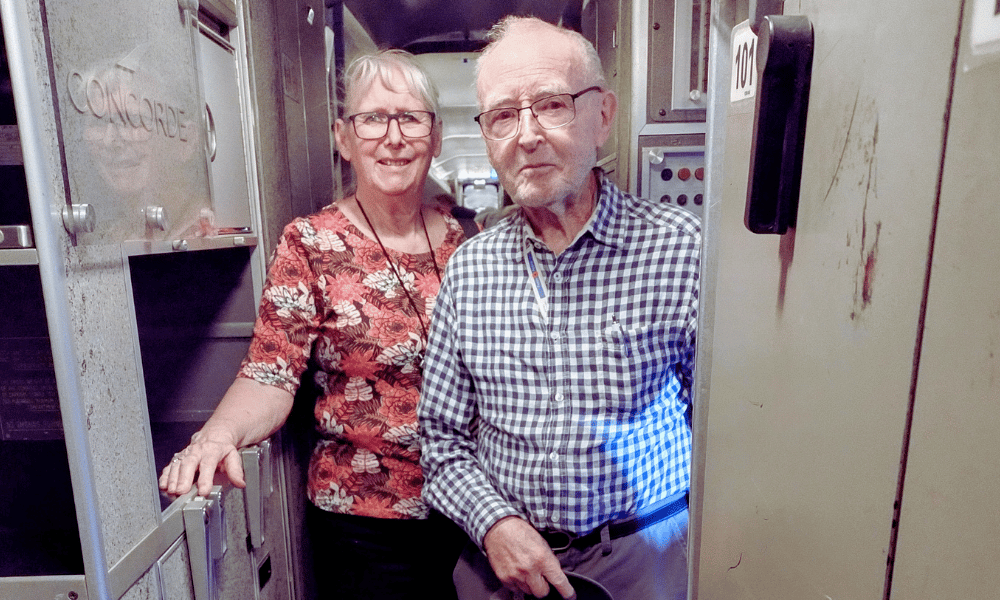



An Alzheimer’s diagnosis can bring uncertainty. But while Alzheimer’s can change lives, a diagnosis doesn’t mean that life stops.
For Derek McCaig and his wife Sue, adapting to Alzheimer’s has meant making some changes but it has also meant continuing to stay active, social and involved in the things they enjoy.
We have had to adapt our lives a little, but there is still a life to be lived and enjoyed, even with a dementia diagnosis.”
Sue McCaig
Derek first experienced memory problems in 2021. His GP eventually referred him to ReMind UK and following a brain scan and assessment by psychologists and doctors at ReMind UK, Derek was diagnosed with early Alzheimer’s disease. He was then prescribed memory enhancers which he continues to take.
Since his diagnosis, Derek has continued to enjoy an active and varied life alongside Sue. He continues to take part in sporting activities, including walking cricket at Lansdown Cricket Club, as well as pétanque and short mat bowls. He also attends an art class for people living with dementia and Music for the Mind sessions.
Away from his regular activities, Derek and Sue enjoy day trips, theatre visits and holidays. One recent highlight was a visit to the Bristol Aerospace Museum, where they were able to board Concorde.
Finding support after Alzheimer's diagnosis
For Derek and Sue, being connected to ReMind UK has been an important part of their journey.
Derek became a research volunteer and took part in ReMind UK’s Trailblazer clinical trial, completing his final tests in June 2026. The trial involved monthly infusions, psychological assessments and regular MRI and PET scans.
For Sue, the experience provided more than opportunities to contribute to dementia research. She describes the social connections and regular contact with experienced healthcare professionals as important benefits for Derek.
Derek always felt very well supported and had excellent care from the Remind UK team throughout the trial."
The couple also developed relationships with other research volunteers and their carers, while Derek particularly enjoyed sharing his stories and memories with the ReMind UK team.
Alzheimer's doesn't define a person
Derek’s story reflects something that can easily get lost when we talk about dementia: the person remains at the heart of the diagnosis.
Derek is not simply someone living with Alzheimer’s. He is a husband, former police officer, sports enthusiast, art student, traveller, storyteller and research volunteer.
His diagnosis is part of his story but it isn’t the whole story. This is something echoed by people in the public eye who have spoken openly about their own experiences of Alzheimer’s.
Actor Danny Glover, who publicly revealed his Alzheimer’s diagnosis in 2026, has spoken about continuing to look forward rather than seeing his diagnosis as the end of his life.
Former Channel 4 News presenter Jon Snow, who has also spoken publicly about living with Alzheimer’s, has continued to work and engage with projects that matter to him since his diagnosis.
Their experiences, like Derek’s, challenge the assumption that an Alzheimer’s diagnosis means giving up the things that make life meaningful.
What helps people live well with Alzheimer’s?
There isn’t one answer, what matters to one person may be very different for another.
For Derek and Sue, staying active, maintaining social connections, continuing hobbies and having access to specialist healthcare and research opportunities have all played a role.
A diagnosis can bring change, but with the right support, people can continue to find connection, purpose and enjoyment in everyday life. Derek and Sue’s experience shows us that Alzheimer’s isn’t simply about what someone has lost. It’s also about what remains, what can continue, and what can still be enjoyed.
More news & views

What is Alzheimer’s disease
Alzheimer’s disease is the most common cause of dementia, affecting memory, thinking, behaviour, and the ability to carry out everyday activities. It is a progressive disease of the brain, which means symptoms gradually worsen over time.
Understanding Alzheimer’s can help reduce fear and stigma, and encourage people to seek advice early if they notice changes in themselves or someone they care about

How type 2 diabetes affects brain health and dementia risk
This months Brain Health blog focuses on the link between type 2 diabetes and dementia. At ReMind UK we are passionate about supporting individuals to maximise their brain health, aiming to reduce or delay their risk of developing dementia.

Andy Burnham’s personal story highlights the importance of dementia research
The conversation around dementia research has been brought into focus following Prime Minister Andy Burnham’s recent comments about his father’s experience with Alzheimer’s disease. Speaking about the impact of dementia on his family, Burnham described the condition as “cruel” and reflected on the challenges faced by families living with the realities of cognitive decline.